
Shohei Ohtani's 2026 Slump: When the Game's Brightest Star Starts to Flicker
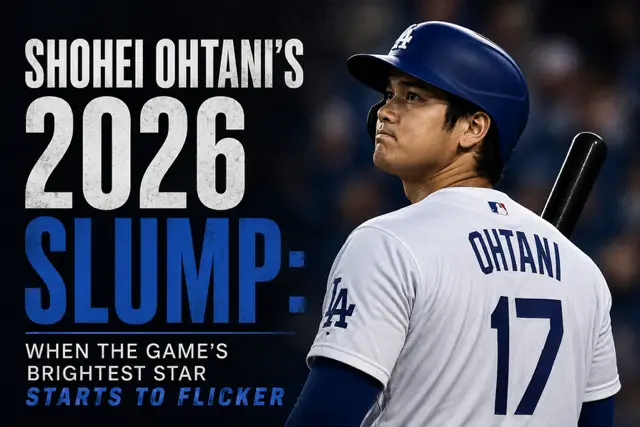
Shohei Ohtani has spent the better part of a decade turning baseball into something that barely feels human. He has made the sport bend around him, redefining what a modern superstar can be while carrying the expectations of an entire generation of fans. That is why the opening stretch of his 2026 season feels so jarring.
For the First Time in Years, Ohtani Looks Vulnerable at the Plate
Through the middle of May, the Dodgers superstar is hitting just .233 with six home runs, and none of those long balls have come this month. His OPS has slipped below .800, territory he almost never occupies, and he has opened May in a prolonged 4-for-36 stretch that has sparked questions rarely attached to his name.
The concern is not rooted only in the numbers on the scoreboard. It is in the way the contact sounds — or more accurately, the way it no longer does.
The Mechanics Tell the Story
The violent line drives and towering opposite-field shots that once felt automatic have been replaced by routine fly balls and weaker contact. Statcast data reflects the decline. Ohtani's average bat speed has dipped from 76.3 mph to 74.8 mph, while a slight change in his bat path has altered the way he attacks pitches. Those adjustments may sound minor, but at the highest level of baseball, small differences can completely reshape outcomes.
His hard-hit percentage has dropped more than 11 percent from last season, settling at a career-low 47.1 percent over a full-season pace. For most hitters, that would still be productive territory. For Ohtani, it stands out immediately.
Dodgers manager Dave Roberts acknowledged recently that the difference is visible even without advanced metrics. When Ohtani is fully locked in, deep fly balls carry into extra-base hits or home runs. Right now, too many of those swings are dying on the warning track or settling harmlessly into gloves.
A Mechanical and Mental Struggle
Part of the issue appears mechanical. Another part appears mental.
Observers around the Dodgers have pointed to a hitter trying too hard to force himself out of the slump. Ohtani has become noticeably pull-heavy during this stretch, often looking eager to yank pitches rather than staying through the middle of the field. That approach has produced weaker ground balls and disrupted the balanced rhythm that normally defines his swing.
For a player whose timing is usually elite, even a slight loss of synchronization can snowball quickly.
The Two-Way Toll
The larger conversation, however, revolves around the physical and mental toll of returning to full two-way responsibilities.
Ohtani's work on the mound has been dominant. Through six starts, he owns a 0.97 ERA with 42 strikeouts, looking every bit like the overpowering ace the Dodgers envisioned. At the same time, his offensive production has fallen well below his standard.
It is impossible to ignore the overlap.
During some of his best offensive seasons, Ohtani was not carrying a complete pitching workload. Now he is once again balancing the demands of starting every few days while remaining the centerpiece of the Dodgers lineup. Over a 162-game season, that kind of strain can quietly affect timing, recovery, and consistency, even for a player whose talent often seems limitless.
The Silver Lining in the Numbers
Still, perspective matters before this turns into panic.
Even amid the slump, Ohtani has improved in several underlying areas. His strikeout rate has fallen to 23.4 percent, his whiff rate is the lowest it has been since 2020, and his walk rate has climbed above 15 percent. Those are indicators of a hitter who is still seeing the ball well, even if the power has temporarily disappeared.
That foundation matters because slumps of this nature are often corrected by a single adjustment.
The Dodgers recently gave Ohtani a rare day away from designated hitter duties, framing it more as a mental reset than a disciplinary move. It may prove valuable. Baseball history is filled with elite hitters who looked lost for weeks before rediscovering themselves almost overnight.
Ohtani's track record suggests he will eventually do the same.
A Reminder of Mortality
What makes this stretch noteworthy is not the possibility that he is declining. It is the unfamiliarity of watching him struggle at all. For years, Ohtani has existed almost outside the normal realities of baseball, overpowering the sport in ways few athletes ever have.
Now, for a brief moment, he looks mortal.
And maybe that is what makes this slump so fascinating. Not because it signals the end of anything, but because it reminds everyone that even the brightest stars in baseball are still fighting the same difficult game as everyone else.